
Oxford Research South Africa at the International Workshop on Adolescence, SRHR & HIV (Gaborone, Botswana | 1–3 October 2025).
December 11th 2025
Written by Mildred Thabeng (Mildred.Thabeng@acceleratehub.org)
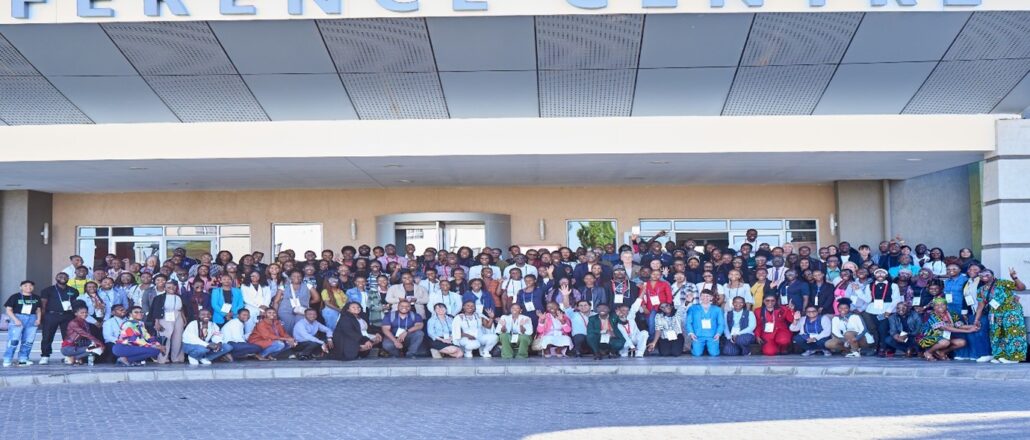
At the heart of adolescent health and well-being is the need for integrated support — a message Oxford Research South Africa brought to the forefront at the International Workshop on Adolescence, SRHR & HIV 2025. We took this opportunity to showcase a series of action-oriented materials and practical tools – developed under the Medical Research Foundation-funded project “On the Right Track – Towards Intersectoral Approaches in Health and Social Services for Adolescent Mothers in South Africa” designed to establish effective partnerships between Civil Society Organizations aiming to support adolescent mothers and their children.
Supporting Adolescent Mothers Through Collaborations and Service Integration
Accelerate Hub colleagues Dr. Janina Jochim and Dr. Kathryn Steventon Roberts research highlights that adolescent mothers’ struggles are rarely confined to a single issue: many face simultaneous challenges of staying in school, lacking childcare, experience heightened risk for poor mental health, and their children may suffer knock-on effects. In contexts where public services are overstretched, civil society organizations play a crucial role in meeting their support needs. However, these organizations often operate in siloes—limiting their reach and impact and failing to address the interconnected nature of adolescent mothers’ lives.
With the support of the Medical Research Foundation, we recently held a two-day workshop with over 12 civil society organizations in the Eastern Cape, South Africa. The workshop aimed to identify needs, barriers, and opportunities for organizations working with adolescent girls, young mothers, and their children, focusing on strengthening intersectoral collaboration. The insights gathered informed the development of three practical sets of materials, which we showcased, trialled, and opened up for discussion at the International Workshop in Gaborone!
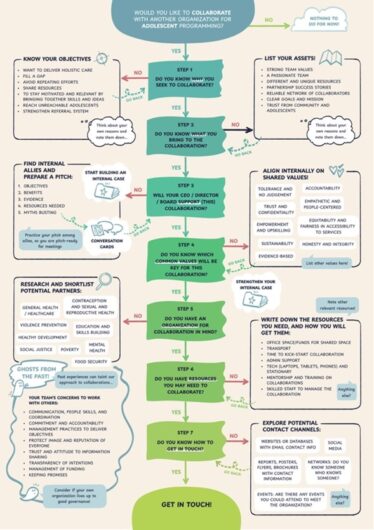
(Developed by Janina Jochim and Nicky Delport)
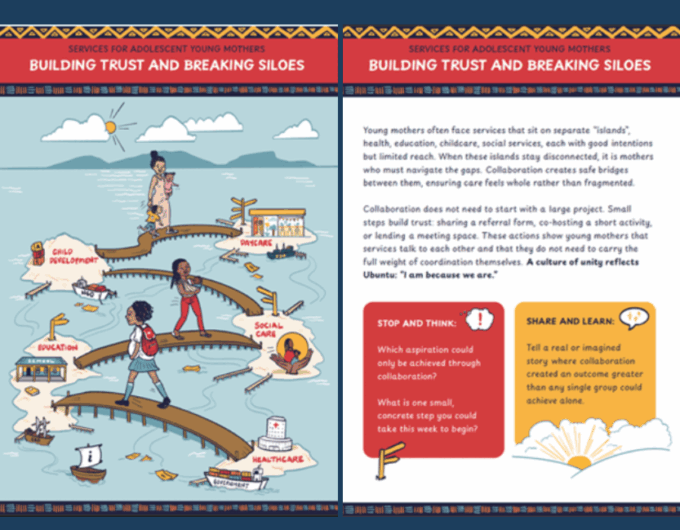
(Developed by Mildred Thabeng, Lulama Sidloyi and Janina Jochim)

Engaging Delegates Through Gathering Interactive Feedback
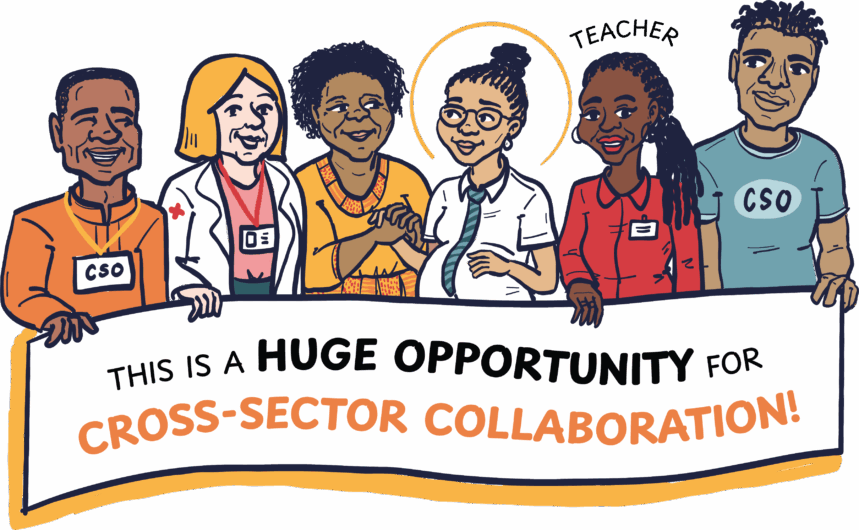
All materials drew a lot of attention, and handouts were gone in minutes! Delegates paused, leaned in, and really engaged with what we presented at our marketplace table – especially the conversation cards for which we still sought feedback from the delegates. Many described the illustrations as warm, honest, grounded in everyday community realities, and mirroring the kind of partnerships many are working toward in their own contexts.
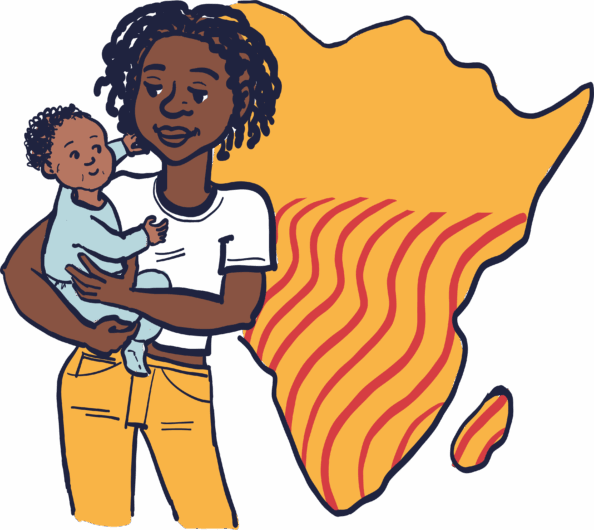
Delegates mentioned that centering the young mother at the heart of each image beautifully captured what true collaboration should look like. Many voiced that they particularly appreciated the authenticity of the designs. The hand-drawn style, and the mix of teachers, elders, health workers, and young mothers, it looked like their world. The visuals told a story that felt familiar and hopeful rather than abstract or polished. The adaptable format was also well received, allowing facilitators to use the cards as real conversation tools rather than static visuals.
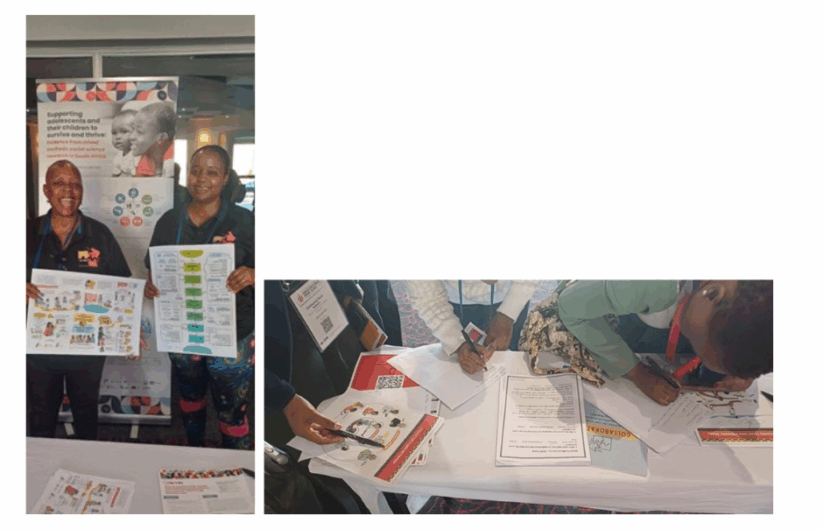
As one participant put it, “We’ve been thinking about collaboration for years, but never thought there could be a tool to help us do more than just think about it.” That comment captured the spirit of the feedback, the cards don’t just talk about collaboration, they help people practice it.
A few constructive suggestions to improve our materials also emerged. We took away four key lessons:
(1) Cards prompting discussions on resource sharing and the benefits of networks of care should show more dynamic exchanges, active and proactive sharing, and stronger interconnected networks.
(2) Cards prompting difficult discussions about obstacles, hesitations, and harmful assumptions about collaborations should better illustrate which exact barriers should be overcome, and the heavy lifting that it may take to do so.
(3) Cards reminding us that differences in opinion or approaches don’t have to mean disconnection in our partnerships should portray a stronger sense of coming together, active listening and respect to achieve a common goal. reconciliation more clearly, a visible coming together.
(4) Symbols of trust and connection should be reflected across all cards, with recommendations including circles, tables, and bridges.
Overall, the cards were viewed as conversation starters, tools that invite reflection, honesty, and imagination. Delegates appreciated the honest, community-oriented approach of the cards and provided valuable insights on how to make them even more dynamic, emotionally resonant, and practically useful for diverse organisational contexts.
Beyond our dissemination activities, the three-day event provided rich learning opportunities for our team. Sessions on funding sustainability beyond 2025 emphasized the need for locally-owned, hybrid funding models that reduce donor dependence – a message that resonates strongly with our collaborative approach to service integration. The conference also validated our core belief: adolescent mothers face interconnected challenges that require coordinated responses across health, education, social services, and community support systems. However, we were also reminded to not forget about including young people themselves in the work!
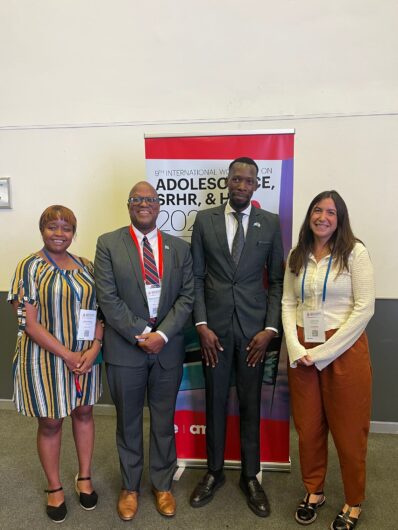
Mildred Thabeng (left) and Luciana Leite (right) from the Accelerate Hub with Assistant Minister of Health Lawrence Ookeditse
What’s Next?
We are currently incorporating the feedback into the next iteration of our collaborative toolkit to make the conversation cards more applicable and representative of the experiences of the diverse partners aiming to provide collaborative support to adolescent mothers.
We will share refined versions of these tools directly with our partners, civil society organizations working in this space, via our website and social media. If your organization works with adolescent mothers and you would like to explore how these collaborative tools might support your work, we would love to hear from you.
Through collaboration, alignment with evidence, and resource-sharing, we believe organizations can have a greater and more sustainable impact on the lives of young mothers and their children.
Special thank you to Janina Jochim for mentorship and encouragement in writing this blog, and the entire team: Abigail Ornellas, Kathryn Steventon Roberts, Lucie Cluver, Lulama Sidloyi, Nicky Delport, Luciana Leite, Fiona Ondara, Laura Sorvala, and colleagues Fliss Carr, Susanna Roberts, and Ayesha Pindoria from the Medical Research Foundation.